BLOCKCHAIN. BUILT FOR PLAY.
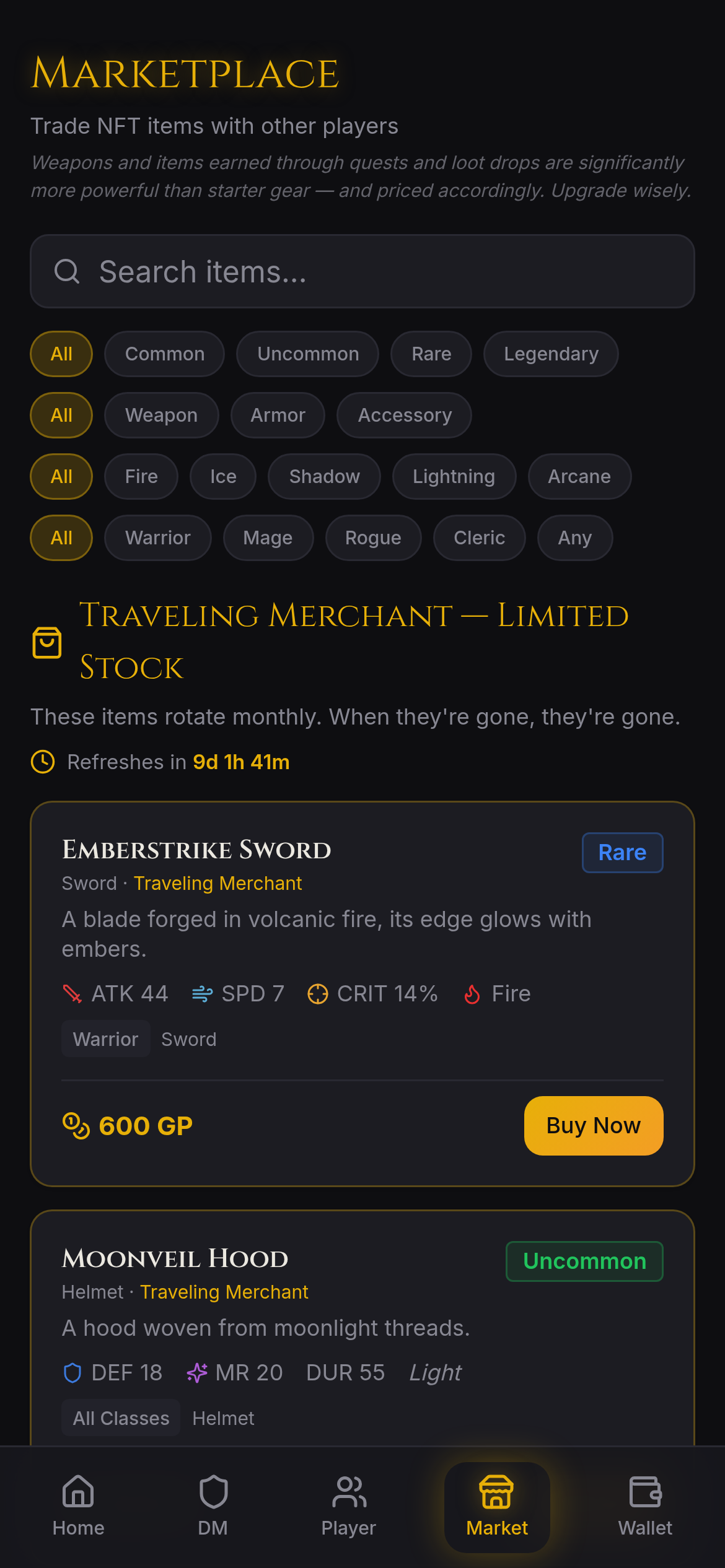
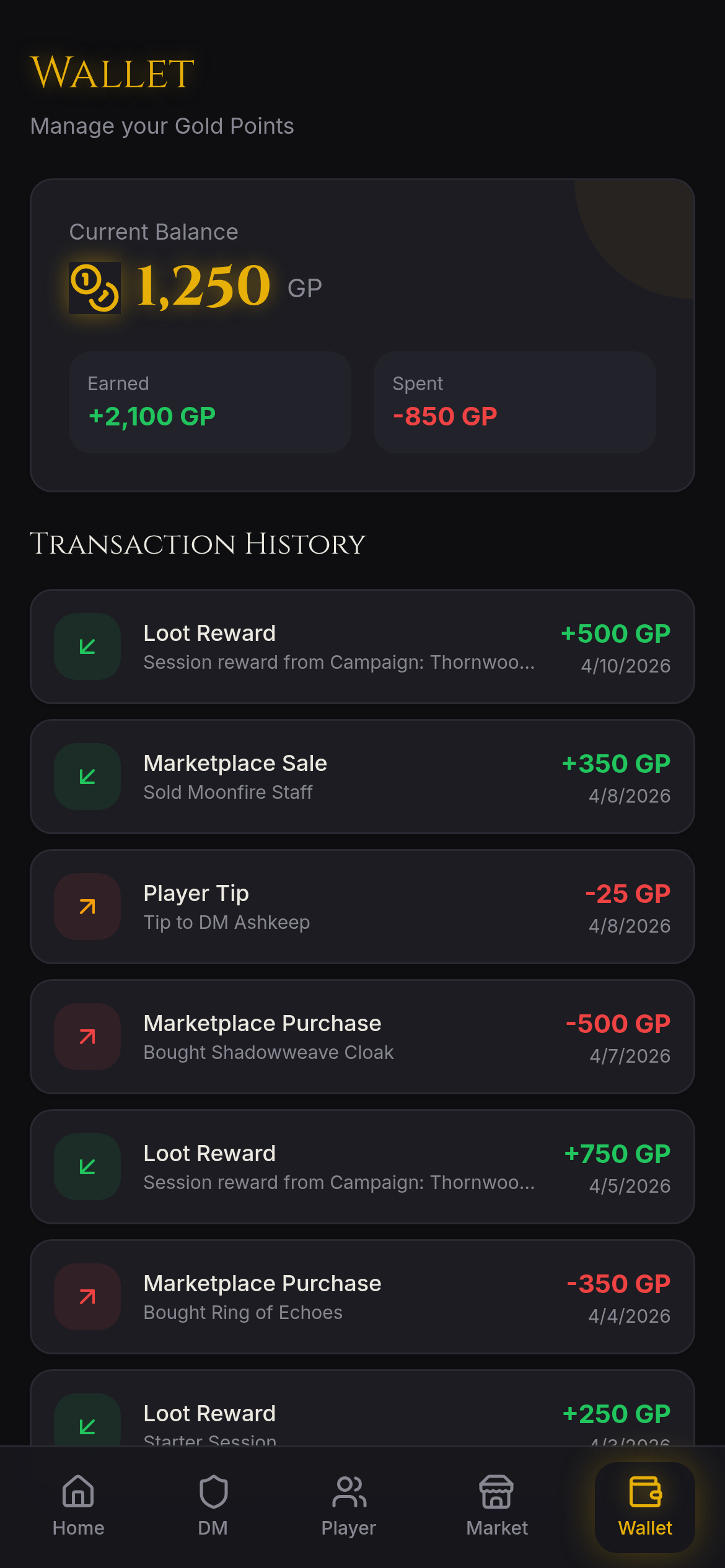
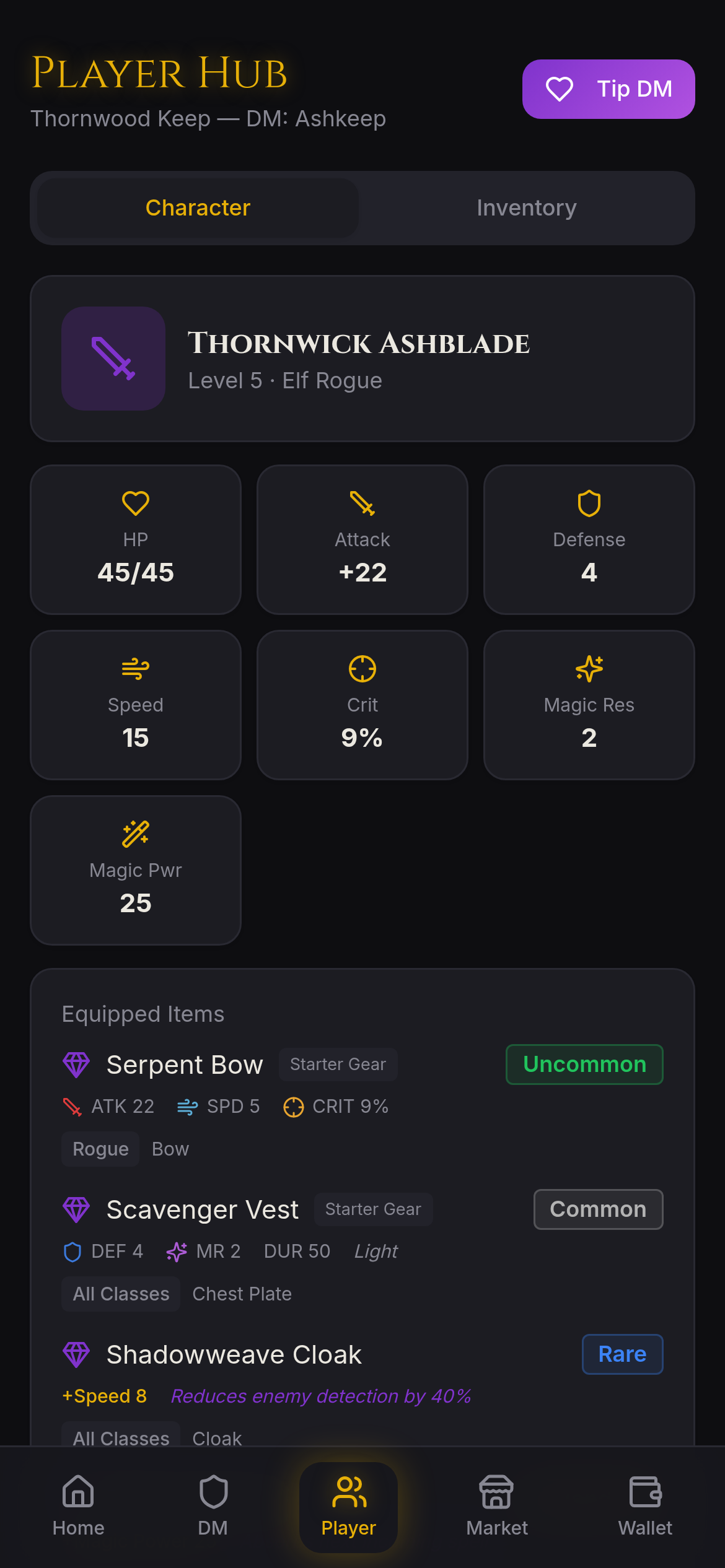
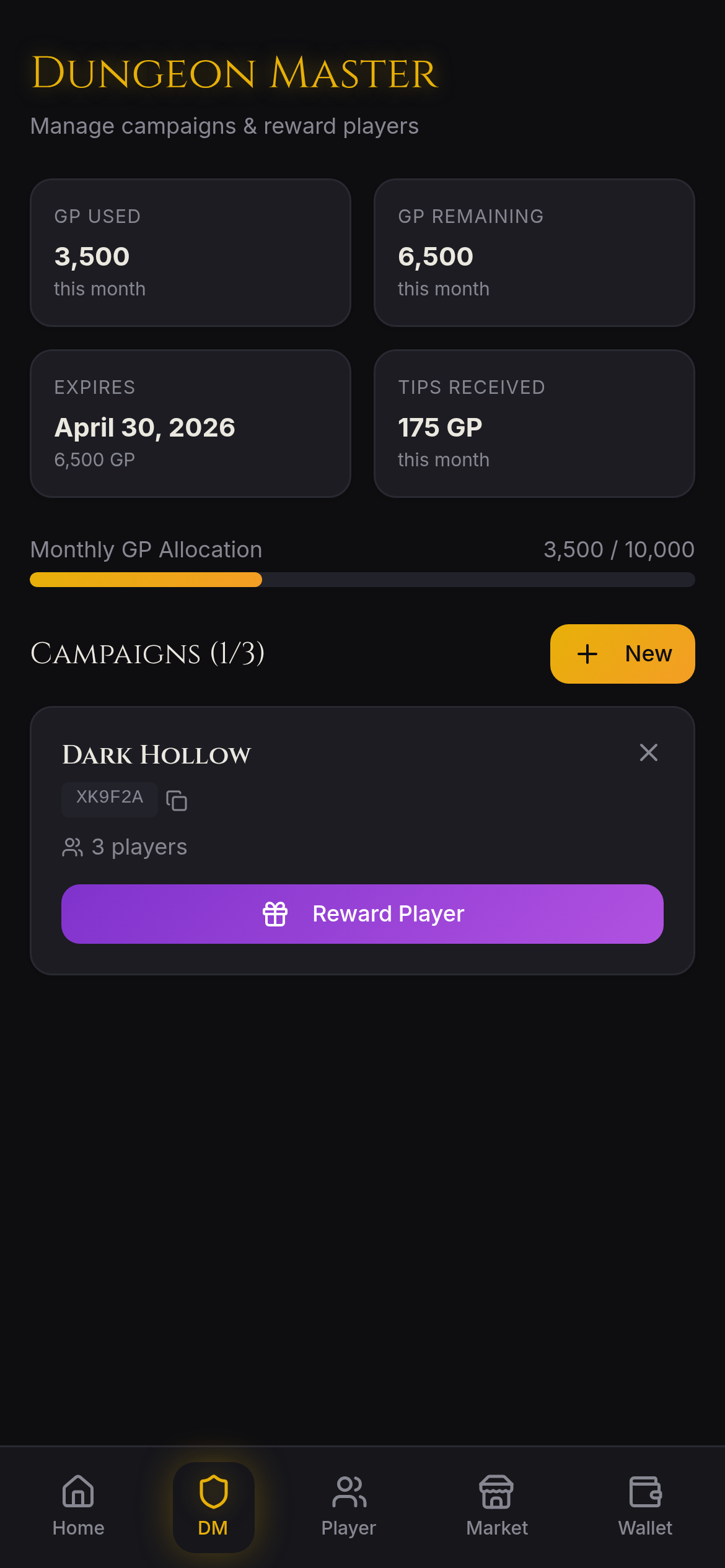
DungeonCoin is a personal project connecting tabletop storytelling with a Solana-based game economy. I created the Gold Piece token and used AI-assisted development to build an interactive app prototype around it—from rewarding players to collecting gear, trading equipment, and tipping the Dungeon Master.

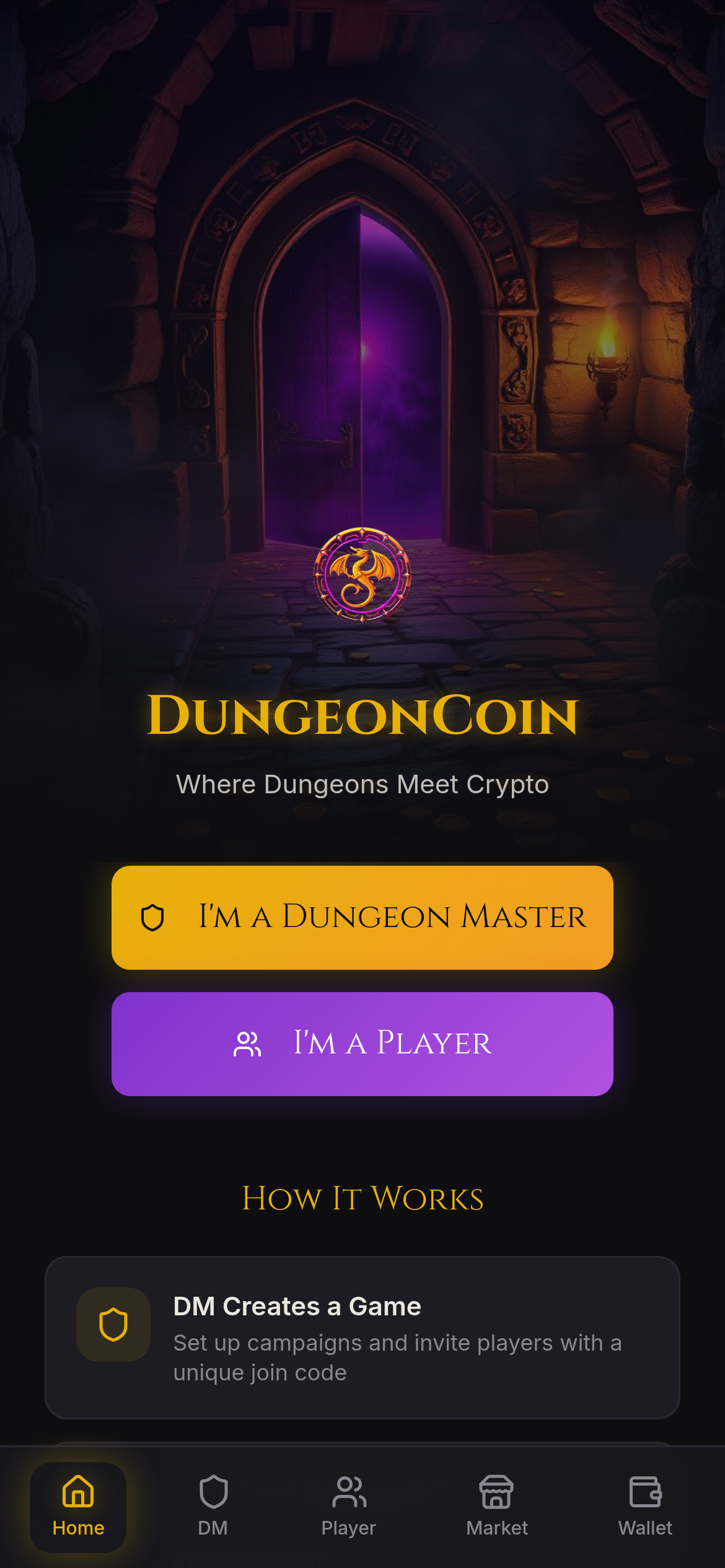
DUNGEONCOIN
What started as a question—“What if our tabletop gold were a Solana token?”—became an exploration of game design, digital ownership, and blockchain.
I created GP on Solana and designed the experience around the people playing: Dungeon Masters distribute rewards, players manage characters and equipment, and a marketplace gives their gold somewhere to go. The wallet experience puts playing first, with external wallet transfers designed as an optional next step.
Behind the fantasy is a detailed system: a dedicated reward-pool model, monthly DM allocations, session limits, unused allocations returning to the pool, and equipment that becomes unavailable while listed for sale. A public AI connector also exposes demo character information, dice rolls, and loot generation.
I developed the concept, visual identity, game economy, user experience, and interactive prototype using Lovable and AI-assisted development.
CURRENT STATUS
GP was created on Solana mainnet. The app runs on sample data; live token transfers, connected wallets, and NFT minting are planned integrations.

THE DUNGEONCOIN ECONOMY
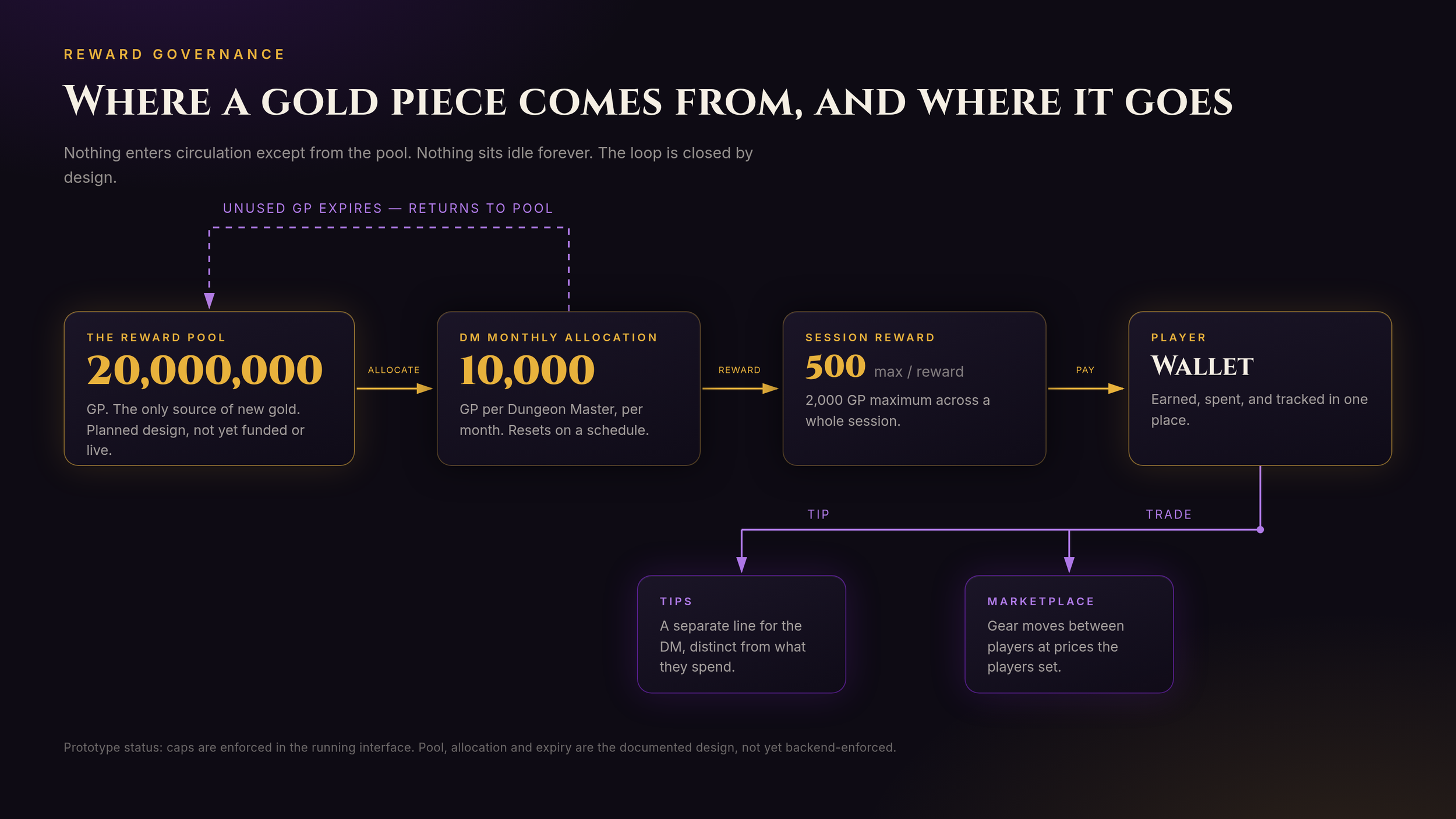
Where a Gold Piece comes from—and where it goes.
I designed DungeonCoin’s reward system around a planned 20 million GP pool. Each Dungeon Master can distribute up to 10,000 GP per month, with a maximum of 500 GP per reward and 2,000 GP per session.
Rewards move into the player’s wallet, where GP can be used to trade equipment or tip their Dungeon Master. Unused DM allocations return to the reward pool at the end of each month.
The system gives every reward a defined path—from allocation to adventure to exchange.
The prototype demonstrates the reward limits in the interface. Pool distribution, monthly allocations, and expiry still require backend implementation.